
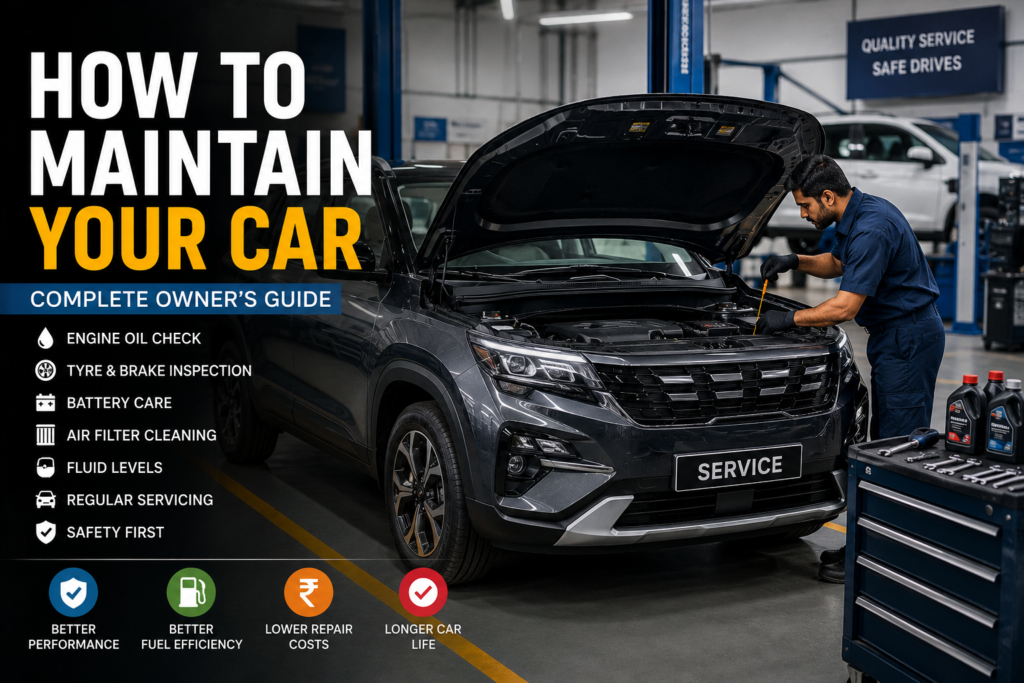
How to Maintain Your Car: Complete Owner’s Guide (2026) | AutoWCinema
How to Maintain Your Car: Complete Owner’s Guide…
Owning a car is a rewarding experience, but regular maintenance is essential to ensure it remains reliable, safe, and efficient. Proper care not only improves performance but also reduces repair costs, increases resale value, and extends the life of your vehicle.
Whether you own a hatchback, sedan, SUV, or electric vehicle, following a regular maintenance routine can save you from unexpected breakdowns.
In this guide, AutoWCinema – Where Every Drive Has a Story explains the essential steps every car owner should follow to keep their vehicle in top condition.
1. Follow the Manufacturer’s Service Schedule
Your car’s owner’s manual includes a recommended service schedule based on time and distance.
Routine servicing generally includes:
- Engine oil replacement
- Oil filter replacement
- Air filter cleaning or replacement
- Brake inspection
- Coolant level check
- Battery inspection
- Fluid top-up
Never delay scheduled servicing, even if your car appears to be running perfectly.
2. Check Engine Oil Regularly
Engine oil lubricates internal engine components and helps prevent overheating.
Check the oil level every few weeks or before long trips.
Replace engine oil according to the manufacturer’s recommended service interval. Using the correct grade of engine oil is equally important for engine performance and longevity.
3. Maintain Proper Tyre Pressure
Incorrect tyre pressure affects:
- Fuel efficiency
- Braking performance
- Tyre life
- Ride comfort
Check tyre pressure at least once a month and before highway journeys.
Also remember to inspect the spare tyre regularly.
4. Rotate and Balance Tyres
Tyres wear differently depending on their position.
Rotating tyres at recommended intervals helps:
- Ensure even wear
- Improve handling
- Increase tyre lifespan
Wheel balancing and alignment should also be checked if you notice steering vibrations or uneven tyre wear.
5. Inspect Brakes Frequently
Brakes are one of the most important safety systems in your vehicle.
Watch for warning signs such as:
- Squealing noises
- Vibrations while braking
- Reduced braking performance
- Brake warning light
Have the brake pads, discs, and brake fluid inspected during every scheduled service.
6. Keep the Battery Healthy
A weak battery can leave you stranded unexpectedly.
Maintain your battery by:
- Cleaning the terminals
- Ensuring tight cable connections
- Avoiding leaving lights on unnecessarily
- Checking battery health during servicing
If your battery is several years old, have it tested before long trips.
7. Monitor Coolant Levels
Coolant helps regulate engine temperature and prevents overheating.
Low coolant levels may cause severe engine damage.
Always use the manufacturer-recommended coolant and never open the radiator cap while the engine is hot.
8. Replace Air Filters
A clean air filter improves:
- Engine performance
- Fuel efficiency
- Acceleration
Dusty driving conditions may require more frequent replacement than the standard service schedule.
9. Keep Your Car Clean
Regular cleaning protects both the exterior and interior.
Wash your car regularly to remove:
- Dirt
- Mud
- Bird droppings
- Tree sap
- Road salt (where applicable)
Waxing the paint periodically helps protect the finish and maintain a glossy appearance.
10. Protect the Interior
Your cabin deserves care too.
Simple habits include:
- Vacuuming carpets
- Cleaning seats
- Using dashboard protectant
- Keeping food waste out of the vehicle
- Using sunshades to reduce heat
A well-maintained interior improves comfort and resale value.
11. Inspect Lights and Wipers
Before every long drive, check:
- Headlights
- Tail lights
- Brake lights
- Indicators
- Fog lamps
Replace worn windshield wiper blades promptly to maintain visibility during rain.
12. Pay Attention to Warning Lights
Modern cars display warning lights when something needs attention.
Common warning indicators include:
- Check Engine
- ABS
- Battery
- Oil Pressure
- Coolant Temperature
- TPMS
Never ignore warning lights. Consult your service center if a warning persists.
13. Drive Smoothly
Your driving style directly affects vehicle health.
Avoid:
- Sudden acceleration
- Hard braking
- High-speed cornering
- Aggressive driving
Smooth driving reduces wear on the engine, brakes, tyres, and suspension.
14. Use Quality Fuel
Always refuel at trusted fuel stations.
Using poor-quality fuel may affect engine performance and increase maintenance costs.
For vehicles requiring premium fuel, follow the manufacturer’s recommendations.
15. Replace Fluids on Time
Besides engine oil, your vehicle relies on several other fluids.
These include:
- Brake fluid
- Transmission fluid
- Coolant
- Power steering fluid (if applicable)
- Windshield washer fluid
Replacing these fluids at the recommended intervals helps prevent expensive repairs.
16. Maintain Proper Documentation
Keep records of:
- Service history
- Insurance
- Pollution certificate (if applicable)
- Registration Certificate (RC)
- Warranty documents
A complete service history improves resale value and helps with warranty claims.
17. Prepare for Long Trips
Before heading on a road trip, inspect:
- Tyre pressure
- Engine oil
- Coolant
- Battery
- Lights
- Brakes
- Wipers
Carry emergency essentials such as:
- First-aid kit
- Torch
- Tyre inflator
- Jumper cables
- Basic tool kit
18. Don’t Ignore Unusual Sounds
Strange noises often indicate developing problems.
Examples include:
- Knocking
- Grinding
- Clicking
- Whining
- Squealing
Early diagnosis usually prevents costly repairs later.
Common Car Maintenance Mistakes
Avoid these common mistakes:
- Skipping scheduled servicing
- Ignoring warning lights
- Driving with underinflated tyres
- Delaying oil changes
- Using incorrect engine oil
- Ignoring small leaks
- Washing the engine improperly
- Neglecting battery maintenance
Expert Tips from AutoWCinema
- Follow the service schedule recommended by the manufacturer.
- Check tyre pressure every month.
- Wash your car regularly and protect the paint with periodic waxing.
- Replace engine oil and filters on time.
- Address unusual noises or warning lights immediately.
- Keep a digital and physical record of all maintenance.
- Always choose genuine spare parts and authorized service centers whenever possible.
Frequently Asked Questions (FAQs)
How often should I service my car?
Follow the service intervals specified in your owner’s manual. Most manufacturers recommend servicing based on time or distance, whichever comes first.
How often should engine oil be changed?
The interval depends on your vehicle and the type of oil used. Always follow the manufacturer’s recommended schedule.
Why is tyre pressure important?
Correct tyre pressure improves fuel efficiency, braking performance, ride comfort, and tyre life.
Can I wash my car every week?
Yes. Regular washing helps protect the paint and removes contaminants that may damage the finish over time.
Does regular servicing improve resale value?
Absolutely. A well-maintained car with a complete service history is generally more attractive to buyers and may command a better resale price.
Final Thoughts
Maintaining your car doesn’t have to be complicated. By following a regular maintenance schedule, paying attention to warning signs, and practicing good driving habits, you can keep your vehicle reliable, safe, and efficient for years to come.
Routine care not only helps prevent expensive repairs but also enhances fuel efficiency, driving comfort, and long-term resale value.
At AutoWCinema – Where Every Drive Has a Story, we encourage every car owner to view maintenance as an investment rather than an expense. A well-maintained car rewards you with dependable performance, greater peace of mind, and enjoyable journeys every time you hit the road.
My Suggestions to know More:-
- Complete Guide to Buying a Car in India
- Complete Guide to Car Insurance in India
- Best Car Accessories Every Owner Should Buy
- Best Dashcams for Indian Cars
- Petrol vs Diesel vs Hybrid vs Electric Cars
- Understanding Bharat NCAP Safety Ratings
- Best Family SUVs in India
- How to Increase Your Car’s Resale Value
thanks a lot…
Author – Nitesh Kumar