
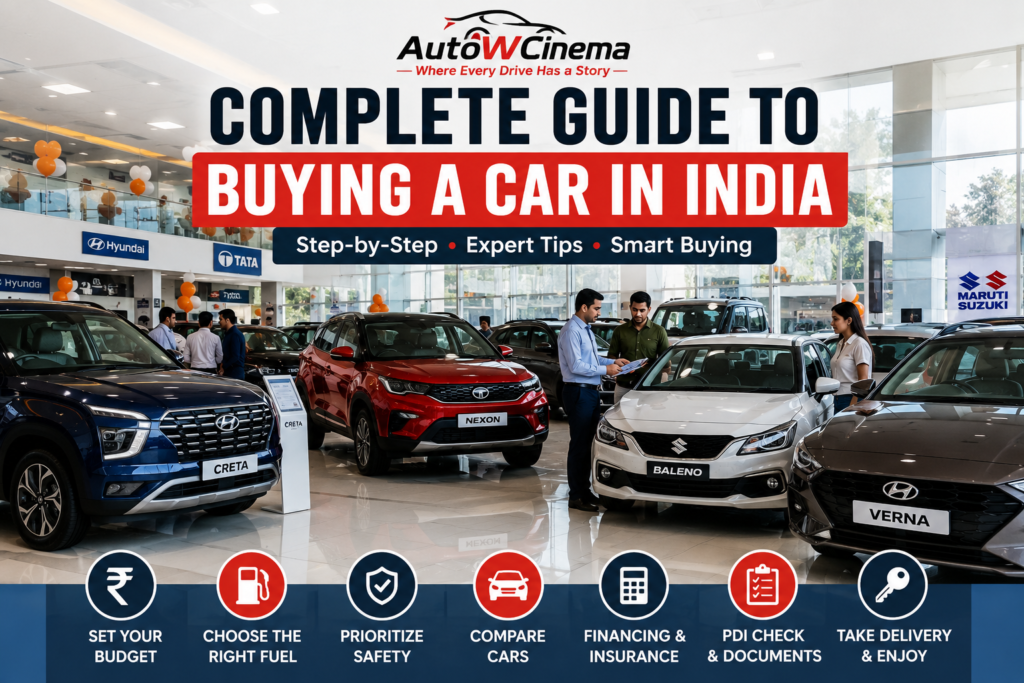
Complete Guide to Buying a Car in India (2026)Everything You Need to Know Before You Buy…
Buying a car is one of the biggest financial decisions for most Indian families. Whether you’re purchasing your very first hatchback, upgrading to a premium SUV, or investing in an electric vehicle, choosing the right car involves much more than selecting your favorite model.
With hundreds of variants, multiple fuel options, financing plans, changing government regulations, and ever-improving technology, buying a new car can feel overwhelming.
That’s exactly why AutoWCinema – Where Every Drive Has a Story has created this comprehensive guide.
In this article, we’ll cover every step of buying a car in India—from setting your budget to taking delivery—so you can make an informed decision and avoid costly mistakes.
Step 1: Understand Why You’re Buying a Car
Before visiting a dealership, ask yourself:
- Is the car for daily office commuting?
- Weekend family trips?
- Long highway drives?
- Business purposes?
- Ride-sharing or taxi use?
- Off-roading?
- City driving?
Different purposes require different cars.
Examples
City Driving
- Maruti Suzuki Swift
- Hyundai Grand i10 Nios
- Tata Tiago
Family Cars
- Maruti Ertiga
- Toyota Innova HyCross
- Kia Carens Clavis
SUV Lovers
- Mahindra Scorpio N
- Mahindra XUV700
- Tata Safari
Luxury Buyers
- BMW X3
- Mercedes-Benz GLC
- Audi Q5
Adventure & Off-Road
- Toyota Hilux
- Jeep Wrangler
- Mahindra Thar ROXX
Buying according to your lifestyle ensures long-term satisfaction.
Step 2: Decide Your Budget
Never buy a car based only on the showroom price.
Instead, calculate the total ownership cost.
Include:
- Ex-showroom price
- RTO charges
- Insurance
- Extended warranty
- Accessories
- Fastag
- Handling charges (if applicable)
- Registration
- Fuel expenses
- Annual servicing
- Tire replacement
- Roadside Assistance
Budget Rule
Ideally,
- EMI should not exceed 15–20% of your monthly income.
- Down payment should be 20–30% of the vehicle price whenever possible.
Step 3: Choose the Right Fuel Type
One of the biggest decisions today is selecting the correct fuel option.
Petrol
Best for:
- City driving
- Less than 12,000 km/year
Pros
- Lower maintenance
- Quiet engine
- Affordable purchase
Cons
- Lower mileage than diesel
Diesel
Best for
- Highway driving
- Above 20,000 km/year
Pros
- Better fuel economy
- High torque
- Excellent for long distances
Cons
- Higher maintenance
- Costlier purchase
- Increasing emission regulations
Hybrid
Best for
- Mixed driving
Pros
- Excellent mileage
- Lower emissions
- Smooth driving
Cons
- Higher initial price
Popular examples:
- Toyota Hyryder
- Honda City e:HEV
- Toyota Innova HyCross Hybrid
Electric Vehicle (EV)
Best for
- Daily city use
- Home charging availability
Pros
- Very low running cost
- Silent driving
- Zero tailpipe emissions
Cons
- Charging infrastructure varies
- Higher purchase cost
- Longer charging times
Popular options
- Tata Nexon EV
- MG Windsor EV
- Mahindra XEV 9e
Step 4: Decide the Body Type
Hatchback
Ideal for
- Small families
- City traffic
- Easy parking
Examples
- Swift
- Tiago
- Baleno
Sedan
Ideal for
- Comfort
- Highway travel
Examples
- Honda City
- Volkswagen Virtus
- Hyundai Verna
Compact SUV
Perfect balance of
- Space
- Comfort
- Mileage
Examples
- Brezza
- Nexon
- Venue
- Sonet
Mid-Size SUV
Ideal for
- Family road trips
- Better road presence
Examples
- Creta
- Seltos
- Grand Vitara
Full-Size SUV
For buyers wanting
- Maximum space
- Premium features
- High performance
Examples
- Fortuner
- Gloster
- Meridian
Pickup Trucks
Best for
- Adventure
- Utility
Examples
- Toyota Hilux
- Isuzu D-Max V-Cross
Step 5: Prioritize Safety
Never compromise on safety.
A cheaper car isn’t worth it if it lacks basic protection.
Look for:
- 6 Airbags
- ABS with EBD
- ESC
- Traction Control
- Hill Hold
- Hill Descent Control
- ISOFIX
- Rear Parking Camera
- TPMS
- ADAS (if available)
Prefer vehicles with Bharat NCAP or Global NCAP 5-star ratings whenever possible.
Step 6: Compare Multiple Cars
Never finalize after visiting just one showroom.
Compare:
- Price
- Features
- Safety
- Service cost
- Warranty
- Waiting period
- Mileage
- Performance
- Reliability
- Resale value
Create a shortlist of at least three models before making your decision.
Step 7: Take a Proper Test Drive
A test drive tells you more than any brochure.
Drive for at least 20–30 minutes if possible.
Check:
- Steering feel
- Braking
- Suspension comfort
- Cabin noise
- Visibility
- Parking ease
- Rear-seat comfort
- Infotainment responsiveness
- Air-conditioning performance
Drive on both city roads and highways if the dealership permits.
Step 8: Understand Variants
Manufacturers usually offer multiple variants.
Example:
- Base
- Mid
- Mid+
- Top
- Top+
Choose the variant that provides the best value instead of simply opting for the highest trim.
Sometimes the mid variant offers almost every essential feature at a much lower price.
Step 9: Don’t Ignore Ownership Costs
The cheapest car to buy isn’t always the cheapest to own.
Consider:
- Fuel efficiency
- Service intervals
- Spare part prices
- Tire costs
- Insurance renewal
- Battery replacement (EVs)
- Extended warranty costs
Brands known for affordable ownership include:
- Maruti Suzuki
- Toyota
- Hyundai
Step 10: Explore Car Financing
Most buyers purchase cars through loans.
Compare offers from:
- Banks
- NBFCs
- Manufacturer finance partners
Look at:
- Interest rate
- Processing fee
- Loan tenure
- Prepayment charges
- EMI flexibility
A shorter tenure generally reduces total interest paid, provided the EMI comfortably fits your budget.
Step 11: Check Insurance Options
Dealership insurance is convenient but not always the most affordable.
Compare policies from multiple insurers.
Recommended coverage:
- Comprehensive insurance
- Zero Depreciation Cover
- Engine Protection
- Roadside Assistance
- Return to Invoice Cover
- Consumables Cover
Choosing the right policy can save significant money in the event of an accident.
Step 12: Negotiate Smartly
Many buyers don’t realize that dealerships often have room for negotiation.
Ask about:
- Cash discounts
- Exchange bonuses
- Corporate discounts
- Loyalty benefits
- Festival offers
- Free accessories
- Free service packages
- Extended warranty deals
Negotiating respectfully can help you secure better value.
Step 13: Check Waiting Period
Some popular models may have waiting periods ranging from a few weeks to several months.
Ask the dealer for:
- Estimated delivery timeline
- Manufacturing month
- VIN availability
- Possibility of faster delivery through another dealership
Step 14: Inspect the Manufacturing Date
Always check:
- VIN Number
- Manufacturing Month
- Manufacturing Year
Avoid accepting a vehicle that has been sitting in stock for an extended period unless you’re comfortable with the condition and receive a worthwhile discount.
Step 15: Perform a Pre-Delivery Inspection (PDI)
One of the most important steps.
Inspect:
Exterior
- Paint quality
- Scratches
- Panel gaps
- Glass
- Lights
- Alloy wheels
- Tires
Interior
- Upholstery
- Dashboard
- Infotainment
- Steering controls
- AC
- Power windows
- Seat adjustment
Mechanical
- Engine bay
- Battery
- Fluids
- Horn
- Wipers
Electronics
- Camera
- Sensors
- USB ports
- Wireless charging
- ADAS (if equipped)
Never rush the PDI. Report any issues before signing the delivery documents.
Step 16: Verify Documents
Before delivery, ensure you receive:
- Tax Invoice
- Insurance Policy
- Registration Certificate (RC)
- Temporary/Permanent Registration
- Warranty Booklet
- Owner’s Manual
- Service Book
- Pollution Under Control (PUC), if applicable
- Spare Key
Keep both physical and digital copies for future reference.
Step 17: Buy Only Useful Accessories
Dealerships may recommend numerous accessories, but not all are essential.
Useful additions include:
- Floor mats
- Mud flaps
- Dashcam
- Sunshades
- Boot mat
- Door edge guards
- Tire inflator
- Portable vacuum cleaner
Avoid paying extra for accessories you don’t truly need.
Step 18: Understand the Running Cost
Monthly ownership expenses may include:
- Fuel or charging
- Insurance renewal
- Servicing
- Parking fees
- Toll charges
- Cleaning
- Tire maintenance
Planning these costs in advance helps avoid surprises.
Step 19: Think About Resale Value
If you plan to sell the car after a few years, resale value becomes important.
Brands with strong resale value in India often include:
- Toyota
- Maruti Suzuki
- Honda
- Hyundai
Factors affecting resale:
- Service history
- Accident history
- Mileage
- Overall condition
- Market demand
Step 20: Avoid Common Mistakes
Many buyers make avoidable errors.
Some common mistakes include:
- Buying only based on looks
- Ignoring safety ratings
- Skipping the test drive
- Not comparing insurance quotes
- Choosing the wrong fuel type
- Overstretching the budget
- Forgetting ownership costs
- Ignoring the manufacturing date
- Skipping the PDI
- Buying unnecessary accessories
Learning from these mistakes can save both money and frustration.
Expert Tips from AutoWCinema
- Shortlist three cars before making a final decision.
- Prioritize safety over flashy features.
- Read genuine owner reviews and long-term ownership experiences.
- Take every family member who will regularly use the car for the test drive.
- Compare dealerships, not just car models.
- Don’t rush during festive offers if the deal doesn’t suit your needs.
- Keep all purchase and service records safely for warranty and resale purposes.
Frequently Asked Questions (FAQs)
Which fuel type is best for a new car in India?
Petrol is ideal for low annual mileage and city use, diesel suits frequent highway driving, hybrids offer excellent fuel efficiency for mixed usage, and EVs are best for urban drivers with convenient charging access.
Is buying a car on loan a good idea?
Yes, if the EMI is affordable and fits comfortably within your monthly budget. Compare interest rates and loan terms from multiple lenders before deciding.
How important is a Pre-Delivery Inspection (PDI)?
A PDI is essential. It helps identify cosmetic, mechanical, or electronic issues before you take delivery, ensuring you receive the car in the expected condition.
Should I buy dealership insurance?
It’s worth comparing dealership insurance with policies from other insurers. Sometimes the dealership offers competitive pricing, but comparing options ensures you get the best value and coverage.
What is the ideal down payment for a new car?
A down payment of around 20–30% of the car’s on-road price is generally considered a healthy balance between affordability and manageable EMIs.
Final Thoughts
Buying a car is more than a transaction—it’s an investment in your daily life, your family’s safety, and your future mobility. By carefully assessing your needs, setting a realistic budget, prioritizing safety, comparing options, and completing a thorough pre-delivery inspection, you can make a confident and informed purchase.
At AutoWCinema – Where Every Drive Has a Story, we believe that the best car isn’t necessarily the most expensive one—it’s the one that perfectly fits your lifestyle, budget, and driving needs. We hope this guide helps you navigate the car-buying journey with confidence and enjoy every mile ahead.
Continue Exploring AutoWcinema
Found this car buying guide helpful? Expand your knowledge with our expert guides to make an even smarter purchase.
Recommended Reads :-
- Best Family SUVs in India
- Best Cars with ADAS in India
- Best Cars for Hills in India
- Petrol vs Diesel vs Hybrid vs Electric Cars
- Best Dashcams for Indian Cars
- Essential Car Accessories Every Owner Should Buy
- How to Maintain a New Car
- Understanding Bharat NCAP Safety Ratings
thanks a lot…
Author – Nitesh Kumar